Application Chains for Real Assets: What to Check First
A wrapped copy of your token may follow other rules than the original. Who checks it?
IN 30 SECONDS
An application chain is a blockchain built for one product: you set the protocol rules and must plan who runs the network.
KEY TAKEAWAYS · 3
- Every other form of the token, like a wrapped or bridged copy, needs its own reviewed path for the rules.
- An application chain hands its operation to your team.
- A chain doesn’t make evidence true or bring buyers.
On this page
Follow every form the asset can take
IN SHORT When a restricted token changes form, check which code governs its next move.
WORDS TO KNOW
- Application chain
- A blockchain built for one product. The team sets its rules and must plan who runs the network.
- Wrapped token
- A second token backed by a locked original. It moves under its own rules.
- Bridge
- Software that moves a token, or a copy of it, to another blockchain.
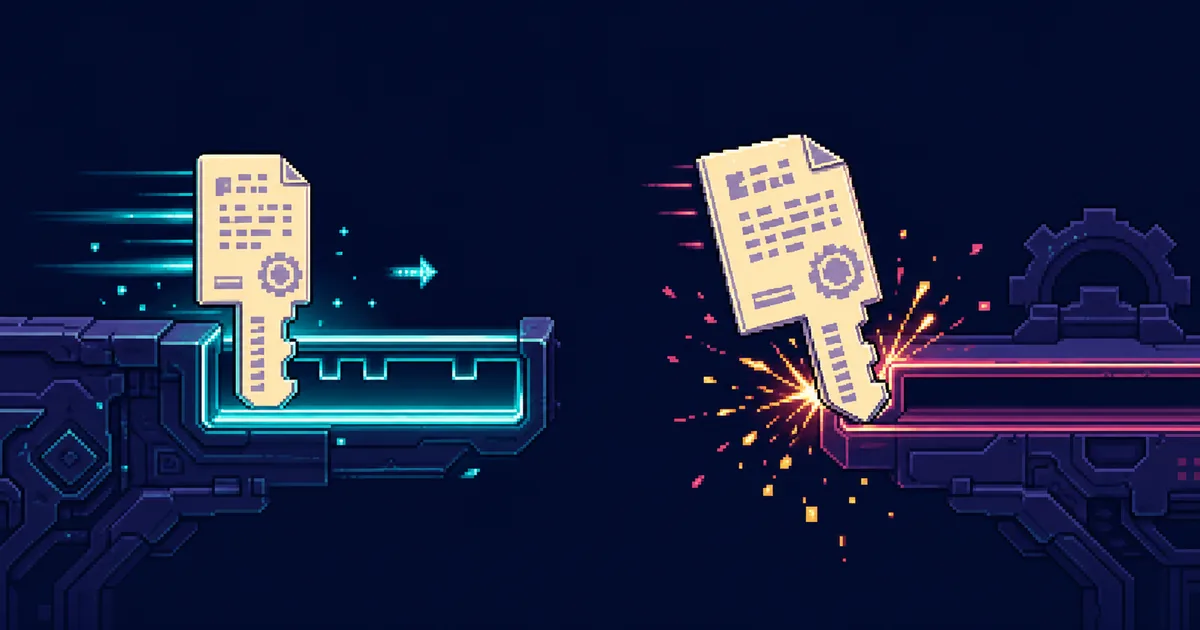
It can become a native coin of the chain, run by the protocol itself, a Wrapped token A second token backed by a locked original. It moves under its own rules. See the glossary or a copy moved through a Bridge Software that moves a token, or a copy of it, to another blockchain. See the glossary. The rules for that new form may not be the token’s own checks.
So each path gets its own review and tests: one specific converter, wrapper or bridge. I’m not claiming that every L2 or every Cosmos EVM deployment has a way around the rules.
STEP BY STEP
Step 1. Restricted token. Review its ordinary transfers and the issuer’s privileged actions.
- Restricted token Review its ordinary transfers and the issuer’s privileged actions.
- Conversion refused May this asset convert at all? If not, keep that path off: the move is refused.
- Other form of the asset If it may, find where the rules are enforced for the new form.
- Return or bridge path Test minting, redemption and rejected operations on the way back.
The Cosmos SDK bank module offers send restrictions, among other controls, but having them doesn’t prove a given chain has set up every path.

IN PLAIN WORDS
Check the exact chain version, and keep unsupported conversions off until tested. The next article walks through that review.
Coming up next: And what does a chain of your own give you?
What an application chain adds, and what it costs
IN SHORT An application chain gives you control over the protocol, and makes running the chain your job.
At Integra, I worked on five pieces:
- an Asset Passport;
- compliance modules;
- escrow and milestone execution;
- fiat proof of payment;
- native commission enforcement.
An Application chain A blockchain built for one product. The team sets its rules and must plan who runs the network. See the glossary let us decide how these pieces fit into the protocol. But the upgrades, validators, RPC access and incidents were ours too.
Fees and capacity
Who pays, up to what load? A fixed gas price still gives a cost in euros that moves with gas used and the token’s price.
Complete enforcement
Which modules can move the asset, where rules are checked, and how a refusal leaves everything unchanged.
An operating team
Who runs validators, upgrades, monitoring and incidents, and the cost of a fork, your own modified copy of the software.
Before calling a rule chain-wide, I’d require tests on every open entry point. Calling it a consensus rule isn’t enough. The code must enforce it at each state change, and upgrades must keep it.
Asset records and agent permissions
IN SHORT An asset record links evidence about an asset, but it doesn’t make that evidence true.
The Asset Passport I worked on was a record built around the asset. I’d split it into: the asset ID, the evidence, who may post updates, and the history.
A signature on an asset record shows who made a statement, not that a valuation or a legal claim is correct.
An agent acting on the chain needs an operator who answers for it, limited powers and a way to revoke them. An identity record is no reason for broad rights.

WATCH OUT
In Solidity, interfaces list the functions you can call; the code behind them decides what they enforce. A real check must test, when it runs, inputs, caller, expiry, revocation and replays: even an allowed function can carry a forbidden amount.
Same habit as least-privilege agent design.
What the product still has to deliver
IN SHORT Better infrastructure can cut repeated integration work, but it doesn’t finish the asset product.
A token that moves still needs eligible buyers, a price and a way to settle. Splitting an asset into small units doesn’t guarantee a buyer when an investor wants to sell.

ITEM GET
One need, one team
FAQ
When a known group of firms needs a shared ledger. Compare who runs nodes, who changes the rules, who sees the data and who settles disputes. Neither trust model settles the legal requirements by itself.
An identity registry is about the investor’s wallet; the Asset Passport I worked on is about the asset: ID, evidence, updates, status. It still relies on responsible issuers and source records.
STAGE CLEAR
What you now know
- Why each form of a token needs its own tested path for the rules.
- What a chain of your own costs your team, and what it can’t do.
Check yourself
Tap or click a question to see the answer.
Illustrative case: on your L2, your ERC-3643 token can be wrapped into a token that skips identity checks. Do you need your own chain?
Not for that reason alone. Review the wrapper and keep that path off until it is tested. Only a requirement the existing network can’t meet justifies a chain.

Former CTO of Integra. Named author (1 of 5) of ERC-3643, first author of ERC-6960, co-author of ERC-7410, and co-author of ERC-8203, which is still a draft. Building production AI and regulated Web3 systems.
Have a project to ship or a role to fill?
Discuss your project or roleFollow the engineering notes
Get new articles on production AI and smart contracts by email.